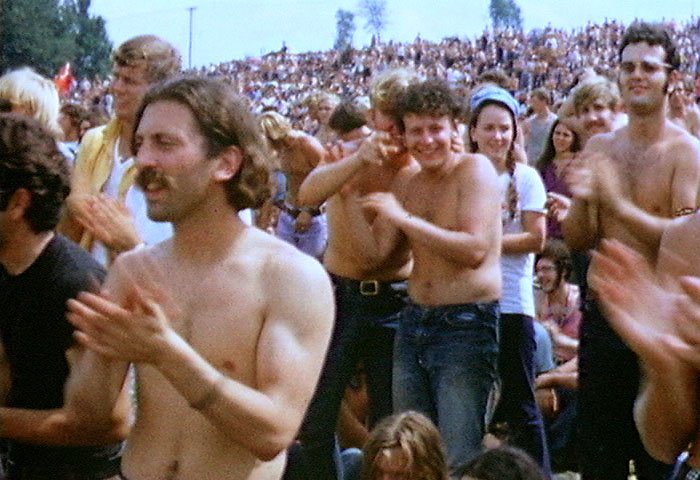
Part of the crowd on the first day of Woodstock, 1969. Photo: Derek Redmond and Paul Campbell, CC BY-SA 3.0, via Wikimedia Commons
The Woodstock Music and Art Fair did not happen in Woodstock. It happened about 60 miles away, on a dairy farm in Bethel, New York, owned by a man named Max Yasgur, and it nearly did not happen at all.
The organizers, four young men who had formed a company called Woodstock Ventures, lost their first site in the town of Wallkill a month before the festival when local officials effectively banned it. Yasgur, a Republican farmer who had no particular interest in rock music, rented them his alfalfa field. His neighbors were furious. He went ahead anyway.
A festival planned for a fraction of the crowd
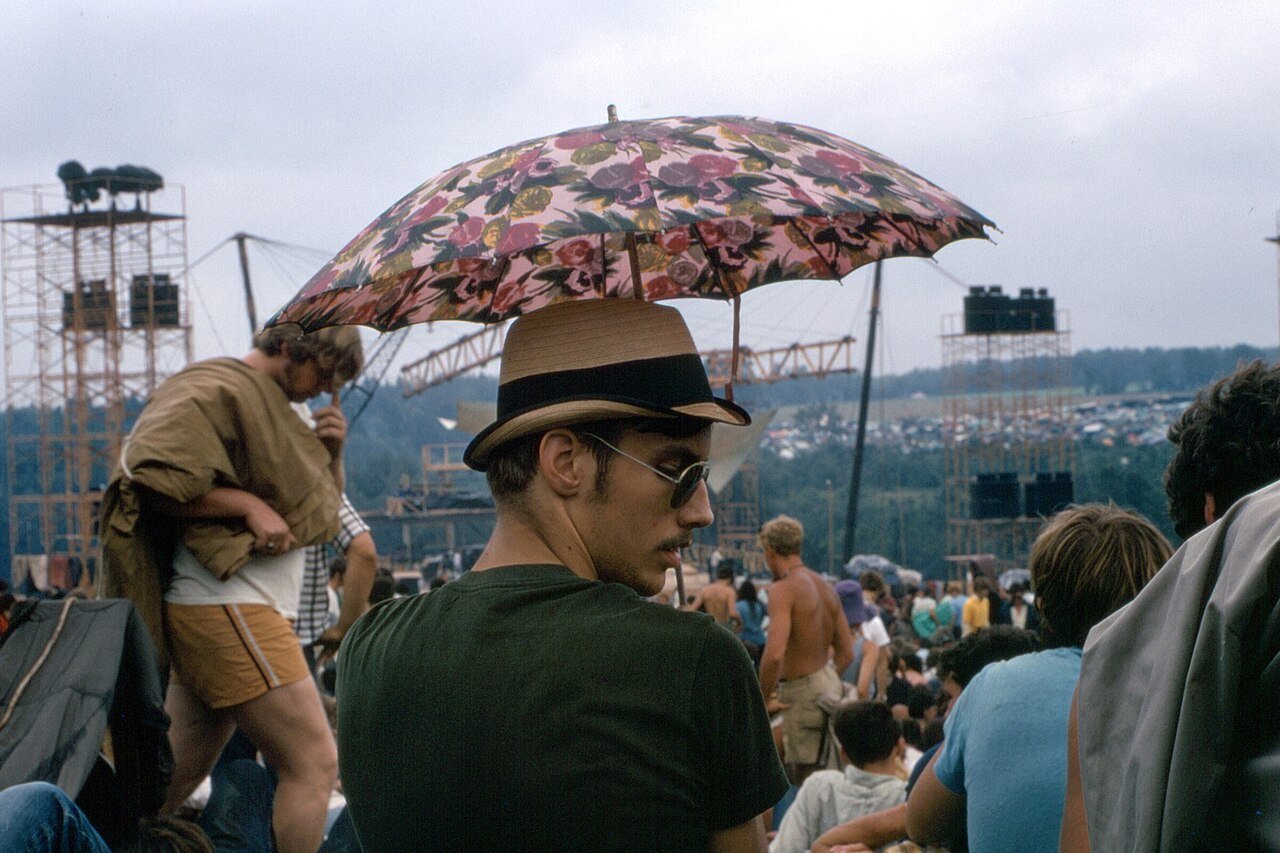
A festivalgoer under a parasol on the field, with the stage towers behind. Photo: James M Shelley, CC BY-SA 4.0, via Wikimedia Commons
The early plans assumed something like 50,000 people. Advance ticket sales eventually passed 180,000, which should have been a warning. By the time the music started on Friday, August 15, 1969, the crowd was heading for an estimated 400,000, and nobody had finished building the fences or the ticket booths.
The organizers made the only decision available to them and announced that the festival was now free. It was a disaster for the company's finances and probably the reason the weekend went down as peaceful rather than violent. There was nothing left to fight about at the gate.
Roads, rain and mud
The traffic was the first thing that went wrong, and it went wrong for miles. Cars were abandoned on the shoulders of local roads and people walked the rest of the way, some of them for hours. Performers had to be flown in by helicopter because there was no other way to get them to the stage.
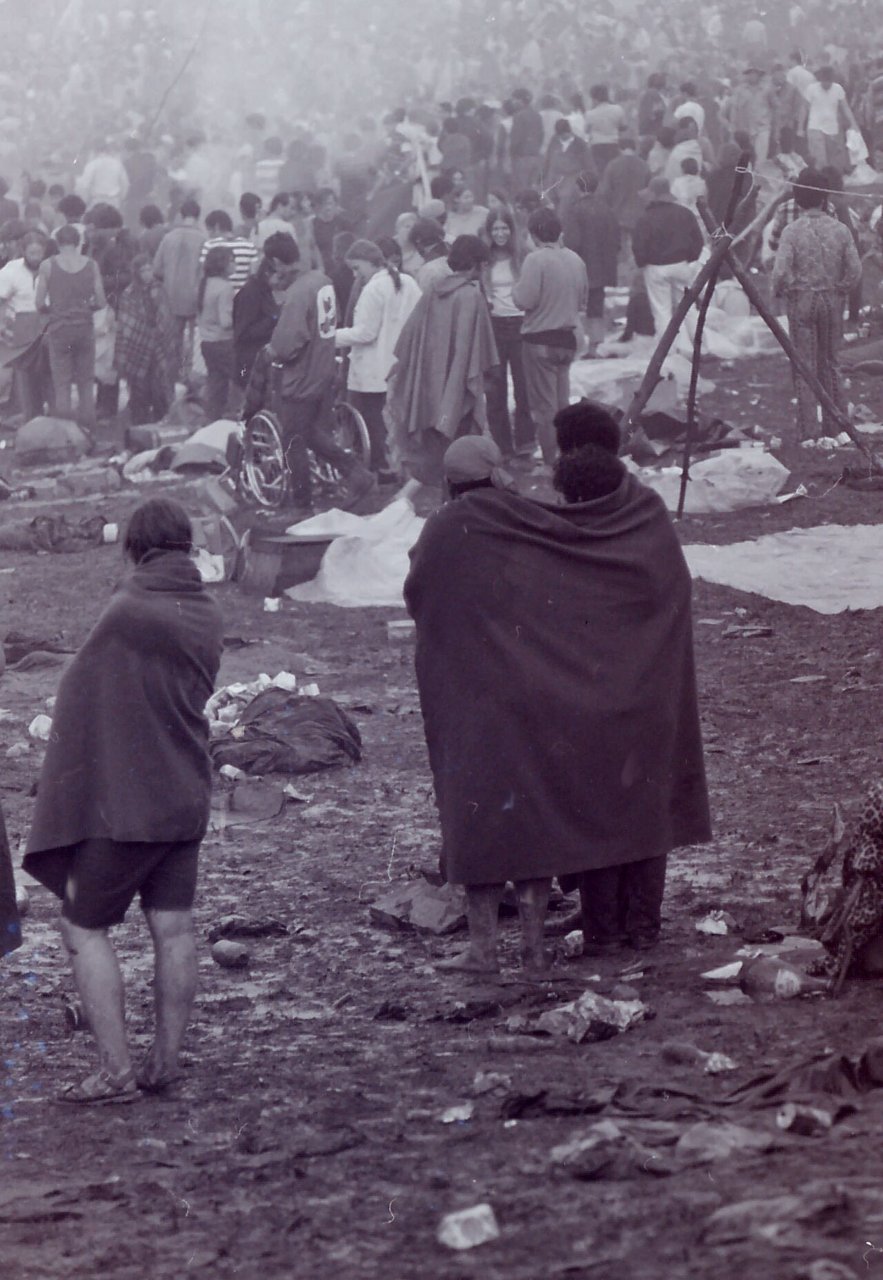
Then it rained. Thunderstorms hit on Saturday and again on Sunday afternoon, and the field turned into the mud that shows up in every photograph of the festival. Food stands ran out early. Sanitation was overwhelmed almost immediately. Sullivan County officials declared a state of emergency, and helicopters were used to bring in food, water and medical supplies.
A commune called the Hog Farm, hired originally to help with security, ended up running free kitchens instead. Local residents, including some who had opposed the festival, handed out sandwiches. Yasgur gave away milk and water from his farm.
The music, eventually
The muddy field at Woodstock, August 1969. Photo: Mark Goff, public domain, via Wikimedia Commons
Richie Havens opened on Friday evening, largely because other acts were stuck in traffic, and he played for far longer than planned while the organizers waited for someone else to arrive. Over the weekend the lineup included Janis Joplin, The Who, Creedence Clearwater Revival, Sly and the Family Stone, Joe Cocker, and Crosby, Stills, Nash and Young.
The schedule slipped so badly that Jimi Hendrix, the headliner, did not go on until Monday morning. By then most of the crowd had gone home. A few tens of thousands stayed to hear him play "The Star-Spangled Banner," which became the most replayed moment of the whole event. (It is a strange thing that the defining performance of the biggest crowd of the decade was seen by a small part of it.)
Who paid for it
Woodstock Ventures came out of the weekend deeply in debt. What rescued the company was the film. The documentary Woodstock, released in 1970, was a commercial hit and won the Academy Award for best documentary, and its soundtrack album sold well too. The festival people remember is, to a surprising degree, the version on screen.
Max Yasgur paid a different price. Some neighbors never forgave him, and he was sued for damage to surrounding properties. He sold the farm a few years later and died in 1973.
The field today
The field in Bethel is still there. Since 2006 the land has been home to the Bethel Woods Center for the Arts, which runs concerts on the hill and a museum about the festival and the decade around it. The original site, where the stage stood, is left open.
Attempts to repeat the festival in 1994 and 1999 went very differently, and a planned fiftieth anniversary event in 2019 was cancelled before it began. The 1969 version seems to have worked partly because nobody was in control of it, which is not a business plan anyone has managed to copy.
Enjoyed this story?Get a new one every day on social.